

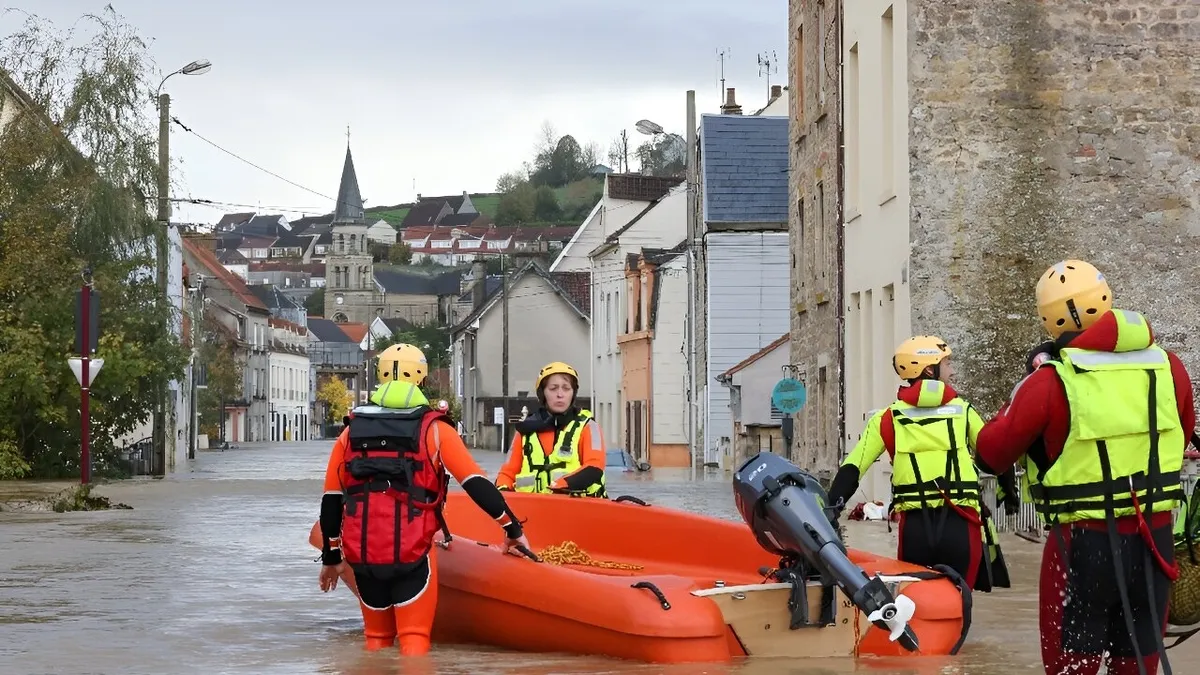
The recent flooding in northern France has led to a critical situation, affecting nearly 200,000 people and necessitating the closure of 74 schools. The consistent rainfall over the past 20 days, amounting to three times the usual volume, has caused rivers to overflow and small rivers to burst their banks. The consequences are dire, with 5200 people cut off from drinking water and 60 flooded houses experiencing power cuts. The fire brigade has been actively engaged in managing the crisis, having undertaken 860 operations since the onset of the flooding.
Unprecedented Rainfall in Three Decades
The severity of the situation is underscored by the fact that the last time such an extraordinary amount of rainfall was recorded in Pas-de-Calais was 30 years ago. The persistent rain has caused local rivers to swell, leading to significant flooding in the catchment areas of the Aa, Hem, Liane, and Canche rivers. The impact is palpable, with entire streets resembling raging rivers and agricultural livestock farms submerged. Furthermore, the weather service Météo France has reported that as much rain fell in six days as is typical for the entire month of November in some areas.
Emergency Services Step Up
The scale of the flooding has prompted a response from emergency services, with the fire department carrying out numerous missions to address the aftermath of the floods. The distribution of bottled water to 5200 individuals deprived of drinking water and the precautionary shutdown of electricity in 60 flooded homes reflect the gravity of the situation.
Societal Impact and the Call for Climate Action
The repercussions of the floods extend beyond the immediate impact on people and infrastructure. The economic fallout cannot be overlooked, as evidenced by the closure of dozens of schools, the disruption to daily activities, and the potential damage to agricultural enterprises. The unprecedented nature of the rainfall and the resulting flooding underscore the urgency of addressing climate change and its implications. The event in northern France is not an isolated incident, as severe weather conditions and natural disasters continue to unfold across the globe. The compounding effects of climate change are undeniable, and it is imperative to acknowledge the ongoing climate crisis.
The response to such events must encompass not only immediate relief efforts but also long-term strategies to mitigate the impact of climate change. This requires a concerted effort at the local, national, and international levels, emphasizing proactive measures to address the underlying causes of extreme weather events. In addition to the immediate humanitarian and environmental concerns, the economic and social ramifications of such events necessitate comprehensive planning and preparedness. The activation of crisis management plans and the deployment of emergency services in response to the floods in northern France exemplify the need for robust disaster management protocols.
Furthermore, the broader context of global weather patterns and natural disasters underscores the interconnectedness of communities and the planet at large. The impact of climate change transcends geographical boundaries, demanding collaborative and coordinated responses to address its multifaceted challenges. The flooding in northern France serves as a stark reminder of the urgent need to confront the reality of climate change and its far-reaching implications. It underscores the imperative for decisive action to mitigate the impact of extreme weather events and to build resilience in the face of a changing climate.
